



Background and Project Design
Nepal’s Increased Sustainable Tea Exports Project (NISTEP) was a Tier 2 project supported under the grant assistance of Enhanced Integrated Framework (EIF), implemented by the Government of Nepal through the Ministry of Industry, Commerce and Supplies (MoICS) and the National Tea and Coffee Development Board (NTCDB). The project ran from 13 November 2020 to late 2023, with a total budget of US$1.895 million, comprising US$1.495 million in EIF grant funding and US$400,000 in in-kind contributions from the Government of Nepal.
The project was structured around two outcomes: improving Nepali tea’s compliance with international quality and certification standards, and strengthening access to international markets. The first outcome was led by NTCDB; the second by MoICS. A Project Steering Committee comprising industry representatives, cooperative members, and government officials provided oversight and strategic direction throughout implementation period.
NISTEP was the first EIF project in Nepal to operate under the “On Budget, On Treasury” modality, whereby project funds were annually reflected in the Government’s budget, disbursed through national financial systems, and expended in accordance with national procurement guidelines. This was a deliberate institutional arrangement designed to strengthen national ownership and the implementation capacity of the National Implementation Unit (NIU).
The project’s early phase was significantly disrupted by the COVID-19 pandemic. Approximately 16 months of the project period were affected, constraining field activities, training delivery, and market engagement. Implementation rate accelerated from 2022 onwards, with the majority of activities concentrated in 2022 and 2023. Yet, 96 percent of planned activities were ultimately completed, as reported by the final evaluation report, reflected the combined effect of several enabling factors such as proactive re-sequencing of the work plan once field access resumed, methodical procurement planning that prevented further lapses, and sustained cross-stakeholder coordination among MoICS, EIF, NTCDB, the NIU, and cooperatives that allowed activities to be mobilised rapidly at the project site.
Organic Certification
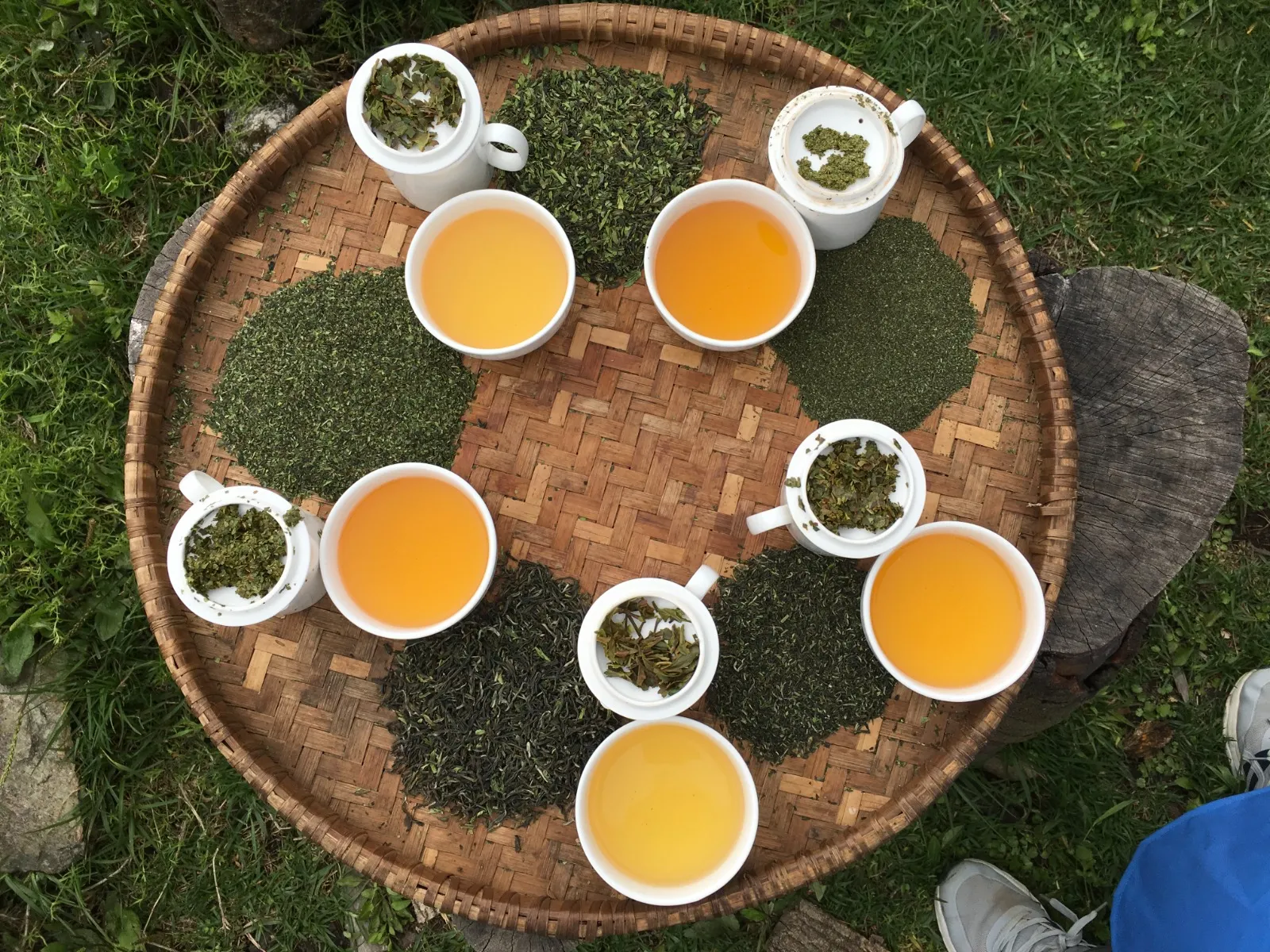
Organic certification is not merely a production standard; it is a market access requirement. In the primary destination markets for premium specialty orthodox tea, including Japan, the United States, and the European Union, organic certification functions as a non-tariff prerequisite for shelf placement in specialty retail channels, and approval for import by health-conscious distributors. For Nepali orthodox tea to compete in these segments, factory-level and farm-level certification is a prerequisite. Without it, even high-quality Nepali teas are effectively confined to lower-value, undifferentiated bulk markets where price competition with larger producing countries is structurally unfavourable. NISTEP addressed this constraint by providing direct support for organic certification and renewal costs across two rounds of disbursement. In the first round, 11 tea factories and cooperatives received support. A further 15 factories were supported in the second round.
To underpin the on-farm conditions for sustained organic production, the project implemented a cattle-shed improvement programme across two rounds, improving a total of 1,094 cattle sheds in Ilam. The programme was designed to increase the availability of farmyard manure as an organic fertiliser input, thereby reducing dependence on synthetic chemicals and strengthening compliance with organic certification requirements over the long term. The programme employed a cost-sharing model in which participating farmers contributed labour while the project provided financial resources, which supported farmer ownership over the intervention and reduced the per-unit programme cost.
The project also produced a set of institutional documents to facilitate continuity beyond the funding period, including a report on the organic certification support modality, a Training of Trainers (ToT) manual on organic cultivation and certification, and a manual on the Internal Control System (ICS) for the group certification of organic orthodox tea.
Farmer Training and Capacity Building
Across both outcomes, NISTEP delivered training to a total of 6,416 farmers, processors, and other beneficiaries, of whom 2,405 (37 percent) were women. Training programmes covered organic tea cultivation, pruning and skiffing, plucking and tipping, Good Manufacturing Practice (GMP), and ICS procedures.
Training on pruning and skiffing was delivered to 2,923 smallholder farmers organised across 81 subgroups under registered farmers’ groups and cooperatives. Field based reporting indicates this contributed to an increase in green leaf production volumes of between 12 and 15 percent. In addition, 57 field inspectors were trained on ICS-related field inspection procedures, and a further 43 inspectors were deployed to assist farmers in maintaining farm diaries.
To support record-keeping requirements for organic certification, 6,500 farmers’ diaries were printed and distributed to farm families. Two rounds of support for updating farm diary records were completed in Ilam.
Market Access and Promotion
Under the second outcome, NISTEP supported a range of market access and promotional activities. The 4th International Tea Festival was organised in 2023 under the aegis of MoICS and NTCDB.¹ The three-day event featured tea tasting sessions, business-to-business meetings, and the first demonstration tea auction hosted in Nepal. The festival drew buyers from four countries and received coverage from international media. Project beneficiaries reported that tea exporters secured purchase orders from buyers in Japan and China in the wake of the event.
In 2023, a delegation of four tea entrepreneurs, participated in the World Tea Expo in the United States. The objective was to broaden market contacts and increase the international visibility of Nepal’s orthodox tea industry. One of the project’s beneficiary factories subsequently won the best black tea award at the World Tea Expo in 2024.
The project additionally commissioned a report identifying new premium market opportunities and outlining market penetration strategies for orthodox tea, and supported the formulation of a Tea Sector Development Strategy encompassing quality, production, investment, market diversification, and sustainability.
Overall assessment
NISTEP addressed a set of structurally interconnected constraints that have historically limited Nepal’s capacity to compete in premium export markets for orthodox tea, including high certification costs, limited technical knowledge at the farm level, and insufficient market linkages.
The decision to operate under the on-budget, on-treasury modality, strengthened government ownership of the systems and processes established under the project thus also contributed to the sustainability of the project`s interventions. The institutional outputs, including the ICS manuals and ToT resources, are designed to remain functional beyond the project’s funding period, supported by the agencies and trained personnel now responsible for their administration.
The principal constraint on project delivery was the 16-month disruption attributed to the COVID-19. Completion of 96 percent of the planned work programme nonetheless reflects substantial delivery relative to the original project design, and project interventions demonstrably supported actors across the full value chain, from smallholder farmers and processors through to exporters.
Structural change takes time nonetheless post-project data also reinforces the project objectives. Tea exports from the eastern region, the primary area of project intervention, have increased steadily in subsequent years.² Additionally, Siddha Devi Tea Estate, a project beneficiary, won four titles at the World Tea Expo 2024, including Grand Champion, Best Liquor, Best White Tea, and the Origin Winner designation across beverages from 13 countries.³
Conclusion and Way Forward for Nepali Orthodox Tea
Nepal’s orthodox tea sector occupies a distinct position within global specialty beverage markets. Unlike commodity black teas traded on the basis of price, orthodox teas are subject to quality-differentiated demand in high-income markets, particularly in Japan, Germany, the United States, and the United Kingdom. The export performance of Darjeeling tea from India’s eastern hills provides the most proximate benchmark i.e. its geographical indication framework and established trade relationships with European importers have enabled consistent price premiums that Nepal’s comparable high-altitude teas have not yet been able to realize.
The most immediate priority for market access is expanding the coverage of organic certification to the full productive base of the sector. With around 20 factories currently certified, a substantial share of Nepal’s processing capacity remains outside the organic supply chain. This limits both the volume of product eligible for premium organic channels and the credibility of Nepal’s organic positioning as a whole. A nationally funded certification support scheme, modelled on the NISTEP subsidy mechanism and administered through NTCDB, would enable consistent expansion of coverage without requiring renewed donor project cycles. This should be complemented by a permanent organic input subsidy programme for farmyard manure production to reduce the ongoing cost of maintaining certification compliance at the farm level.
Improving productivity gains at scale is also a critical lever for trade competitiveness. The 12 to 15 percent increase in green leaf yields observed following NISTEP’s pruning and skiffing training demonstrates that capacity building related interventions delivered measurable output gains. Applied across the estimated 28,000 smallholder tea farming households in Nepal’s eastern hills, systematic extension of these practices could yield a material increase in total certified green leaf supplies.
Strengthening the Collective Trademark requires a dedicated legal and promotional strategy. The trademark “Nepal Tea: Quality from the Himalayas” currently functions as a quality signal in domestic and limited export contexts, but its value to exporters is constrained by the absence of international registration and marketing recognition. Filing for trademark protection in key destination markets, including the European Union, the United States, and Japan, would provide Nepali exporters with legally enforceable brand rights and reduce the risk of imitation in competitive markets. The Ceylon Tea board model and the success of the Tea Board of India in marketing Darjeeling as a premium designation offer applicable precedents for this approach.
Geographical indication protection represents the next strategic layer of market access development. A registered GI for Ilam or Nepali orthodox tea more broadly, pursued through the WIPO Lisbon System and bilateral agreements with major importing countries, would create a protected origin designation capable of commanding documented price premiums. Evidence from comparable agricultural products, including Darjeeling tea, Colombian coffee, and Parmigiano-Reggiano, consistently shows that GI registration enables producers to capture a greater share of value added within global value chains by restricting the substitution of non-certified alternatives. Nepal has the natural endowment, the production history, and the institutional framework to make a credible GI application.
The NISTEP intervention and the post-project export trajectory reveals that Nepal’s orthodox tea sector is at an inflection point. The organic attempts, the massive farm-level training programmes, and the initial market connections established under the project provide a foundation that, if consolidated and extended through sustained public private investment and a coherent trade development strategy would lead to export competitiveness of Nepali orthodox tea.
References:
https://english.onlinekhabar.com/ilam-to-host-international-tea-festiva…
https://thehimalayantimes.com/business/tea-exports-up-by-46-percent
https://myrepublica.nagariknetwork.com/news/nepal-s-siddha-devi-tea-est…
If you would like to reuse any material published here, please let us know by sending an email to EIF Communications: eifcommunications@wto.org.